Writing Local History as a Book — How to Record Your Community's Stories
20 March 2026
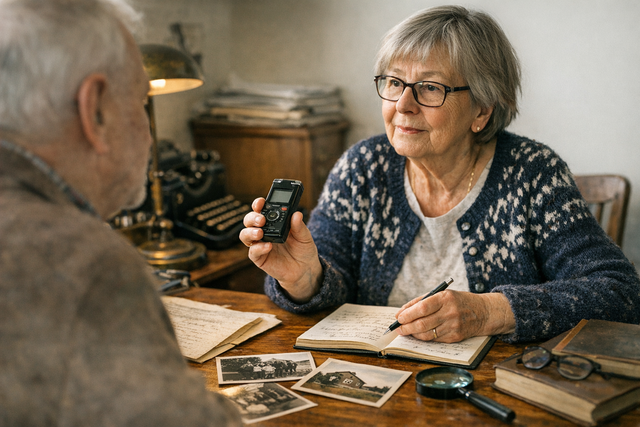
Every village, neighbourhood and small town has a story of its own. Long-time residents remember what life used to be like — how the village shop ran, where the children played, who lived in which house, and what happened the winter the snow came in October. These stories are living history, and you won't find them in any archive.
But time is running out. The generations born after the war are growing older, and with them an irreplaceable body of local knowledge is disappearing. Every year that passes without recording means lost stories.
Capturing local history as a book doesn't require a degree in history or years of writing. In this guide we'll show you how to gather local history, how to combine interviews with archival sources, and how it all becomes a book.
Capturing local history is one way to turn stories into a book. If you'd like an overview of all the starting points, read our overview guide, writing a book about your own life.
Why local history is worth recording right now
Living memory disappears every day
The villages and small towns of Europe still have people who remember wartime, the arrival of evacuees and refugees, the first television in the village, and how agriculture changed with mechanisation. These memories are unique — they have never been written down anywhere.
Once these people are no longer here to tell their stories, the stories are gone for good. That is why recording them is more urgent now than ever before.
Official history only tells part of the story
The official histories of municipalities and parishes describe administrative structures, population figures and decisions. But they rarely capture what ordinary life was like. The real richness of local history lies in people's own experiences: how it felt, what they did, how they got by.
Community identity grows stronger
When the history of your home area has been recorded as a book, it strengthens residents' shared sense of identity. Younger generations understand more clearly where they come from. Newcomers to the area can learn about the past of the place where they now live. The book builds bridges between generations and between people.
Sources of local history — how information is gathered
A good local history book combines oral testimony with written sources. Neither on its own is enough to tell the whole story.
Oral sources — interviews
Interviews are the heart of local history. They reveal what you won't find in any archive: what daily life was like, how the community worked, who the key figures were and how change was experienced.
Who to interview:
- Long-term residents who have lived in the area for decades
- Former shopkeepers, teachers, postmen and other key local figures
- Farmers who remember the transformation of the countryside
- Craftspeople and tradespeople who know the area's working history
Start with those who are oldest — their memories are usually the most urgent to record. You'll find more tips for interviewing older relatives in a separate guide.
Local archives
Across Europe there is a wealth of local archives that hold valuable material:
- Municipal archives — council reports, committee minutes, planning records
- Parish and church archives — parish registers, baptism and marriage records, public notices
- Regional archives — wider regional official material
- National archives and their digital portals — digitised documents available online
- Heritage agencies and cultural environment registers — built heritage records and surveys
Local history societies and libraries
Many local history and heritage societies have already gathered material: photographs, press cuttings, maps, memoirs. Local libraries often keep local history collections. Get in touch and ask what they have — you may be pleasantly surprised.
Photographs and maps
Old photographs are gold for local history. They show what places looked like before, who lived in them and how the environment has changed. Good sources of photographs include:
- Family albums — ask your interviewees to lend them for scanning
- Local museum collections
- Old newspapers (many national libraries have digitised archives)
- Historical maps from national mapping agencies
Newspapers
The archives of local newspapers are an invaluable source. The events, news items, obituaries and advertisements they contain say a great deal about local life across different decades.
How to collect local history — a practical guide
1. Put together a small working group
Recording local history is at its best when it's a community project. Bring together a group of two to four people, ideally of different ages. The younger members can handle the technology while the older ones know the area's history and its people.
Good partners to work with include:
- The village or residents' association
- The local history or heritage society
- The local library
- Adult education centres
- Pensioners' associations
Association history projects can also produce valuable local-history material — it's worth asking whether local clubs and societies have already collected anything.
2. Identify your interviewees and themes
Start by thinking about what you want the book to cover. The whole history of the village over the past hundred years? The events of a particular period — wartime, for example? Changes in local industry? The story of the school?
Narrowing down the theme helps you focus your interviews. It also makes it easier to see who to interview first.
3. Prepare interview questions
A good interview is a conversation, not an interrogation. Prepare open questions that encourage free-flowing storytelling:
- "What was life like here when you were a child?"
- "How did people earn their living back then?"
- "Which places mattered most — the shop, the school, the church, the village hall?"
- "Which celebrations or events do you remember especially well?"
- "How has the place changed during your lifetime?"
- "What has been lost that you'd want back?"
- "Is there a particular story you'd really like to tell?"
Let your interviewee speak at their own pace. The best stories often come in the side comments and digressions.
4. Record everything
Record every interview. A phone voice recorder is perfectly adequate, but make sure:
- You are close enough to the speaker
- Background noise is kept to a minimum
- The battery and storage are sufficient
- You do a test recording before the real interview
A single interview may last 30–90 minutes. Split longer interviews into several sessions so your interviewee doesn't tire.
5. Combine your sources
Once you have a collection of interviews, weave them together with archival sources. Check dates and names against archives. Hunt for photographs that match the events described. Fill in gaps with newspaper sources. Different sources reinforce and complement each other.
Structural options for a local history book
Chronological
The book moves through time: the founding of the village → the period of growth → the war years → reconstruction → the present day. The clearest structure, well suited to a comprehensive history.
Thematic
Chapters deal with different topics: housing, livelihoods, schools, the church, leisure, celebrations. This works well when you want to go deeper into individual subjects and compare experiences across different eras.
Person-centred
Each chapter tells the story of one person or family in the area. This works particularly well for an interview-based book in which every interviewee gets their own chapter.
Place-centred
The structure follows physical locations: the school, the church, the shop, the factory, the shore. Each chapter tells the story of one place through the people who lived and worked there.
Examples of local history projects
A village book
The village association interviews the oldest residents and gathers their stories into a book covering the past hundred years of the village. The book is distributed to residents and donated to the local library.
Memories of a neighbourhood
A neighbourhood association collects memories from long-term residents: how the area was built, how local services changed and what kind of people lived there. The book is launched at the neighbourhood's centenary celebrations.
The story of a trade or industry
Fishermen, farmers, shopkeepers — every occupational group has its own local history. From interviews you can put together a book that captures the story of one trade in a particular place.
School and youth memories
Former pupils of an old village school or grammar school recall their school days. What were the teachers like? What did they do at break time? How has schooling changed?
Funding and publishing
You can apply for funding for a local history book from sources such as:
- Municipal or regional cultural grants
- National federations of local history societies
- EU rural development funding (such as LEADER programmes)
- Sponsorship from local businesses
- Crowdfunding from villagers themselves
Publication can be a printed book, a digital edition, or both. Even a small print run is enough when the book is intended for local distribution. Tools such as Vellu.ai make turning recordings into a book significantly easier — transcription, structuring and chapter drafting are handled by AI, freeing the working group's time for interviews and final polishing.
Start small — grow from there
You don't have to begin by writing the whole history of the municipality. Start with a single interview. Interview one person, record their stories, and see how a piece of text takes shape. Once you see the result, enthusiasm grows and the project expands naturally.
Recording local history is a race against time, but it is also one of the most rewarding projects a community can undertake. Every story preserved is a victory — and together they form an irreplaceable collection of living history.
Start recording the stories of your home area — interview, record, and turn history into a book for the generations to come.
Frequently Asked Questions
Do you need a degree in history to write a local history book?
No. Local history can be recorded by anyone who is interested in the stories of their home area. The most important skill is the ability to listen and ask good questions. Archival sources complement the interviews, and local libraries and history societies will help you use them.
Where can I find interviewees for a local history project?
Start with village associations, the local church, and local hobby groups. Care homes and sheltered housing often house long-term residents with enormous reserves of memory. A piece about the project in the local paper can bring forward new interviewees. People who have moved away from the area can also take part via remote interviews.
How do I combine interviews and archival sources into a book?
Interviews provide living memory and archives provide the factual backbone. A good local history book combines both: archive records give you precise dates and events, while interviews bring out how things felt and what daily life was really like. AI tools help you organise a large body of material into a readable whole.
Can a local history project attract funding?
Yes. Common sources include municipal cultural grants, national local history federations, EU rural development funding such as LEADER in many countries, and sponsorship from local businesses. Crowdfunding from villagers themselves also works well. Many local authorities look favourably on projects that record local cultural heritage.
How long does a local history book need to be?
The book doesn't have to cover the entire history of the area from beginning to end. The best approach is to narrow the topic: one village, one period, one theme, or the story of a single trade. A tightly focused book is more interesting and more achievable than an over-broad general account.